4.1 Types of Assessment in Online Learning
Cerințe pentru finalizare
5. Formats of Assessment in Online Learning Environment
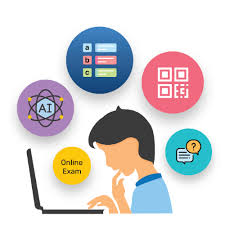
There are many formats of assessment in online learning environments. Some examples include:
- Case studies prompt students to put concepts, theories, and policies into a specific context and support the development of critical thinking skills, allow students to learn from one another, and encourage practical reasoning while generating strategies and solutions to real issues.
- Reflections. Critical reflection essays are often written at the end of a course as an opportunity for students to look back on their learning throughout the course. Embedding a reflective component within other assignments allows to gauge how learning is developing through these tasks.
- Infographics develops students critical thinking and communication skills. Infographics make great assignments when needed to make connections, discern the most relevant information, and communicate it in a different way.
- Online discussions. Thoughtful discussion prompts allow students to explore course concepts, gain new perspectives and understanding, participate actively and collaboratively in online courses.
- Online student presentations, whether live or pre-recorded, allow students to express their learning in different modes – spoken words, gestural expression, and often with images/visual aids. Students learn the skills of verbal expression and knowledge translation
- Podcast assignments allow students to demonstrate their learning in a different mode; students can expand on traditional knowledge generation and translation approaches by using strategies such as including portions of interviews, adding relevant sounds, music, etc.
- Open book exams. Open book, or open resource, exams provide dynamic opportunities for students to connect course materials with their previous learning by analyzing, synthesizing, critiquing, and/or evaluating information; require students to connect course material to solve real-world scenarios or problems.
- Annotated bibliography provides students with the opportunity to strengthen skills in finding appropriate research literature, reading critically to assess the contributions of various articles, and writing concisely and coherently for a broader academic audience.
- Media critique critiquing a current media source can be a meaningful learning experience that allows students to make connections between their daily lives and course content.
- E-portfolio process of selecting the best examples of learning in a course or program can be illuminating as students see how far they have come; learning becomes visible as students organize artifacts that showcase their knowledge and skills.
- Learning journal students are required to write critically about what they have learned, drawing upon their experiences and/or practice, and relating it to their reading; enabling students to demonstrate complex learning outcomes including critical thinking.
In conclusion, assessment is an important part of the cycle of learning, which also includes outcomes (what?), strategies (how?), and content. Assessment is an integral part of the planning process and must coalesce with all other aspects of the intended learning experience, whether in terms of course or program. Assessment permits learners to engage with open-ended tasks that sustain learning and the learning cycle. Assessment presents learners with opportunities to make connections with prior knowledge and to build relationships between their own learning.