
Lesson 2.3 Pedagogical Approaches for Online Teaching
7. Strategies to Course Design
Several strategies for effective online course design have been proposed. For example, Active Learning Cheat Sheet. 10 Steps to getting started provides the following 10 steps:
- Create an open and safe environment.
- Set a goal for the activity.
- Choose the right exercise.
- Identify preparation for the exercise.
- Consider links to other class elements.
- Plan how you will introduce the activity.
- Plan the logistics.
- Consider how you will judge success.
- Just do it.
- Iterate and expand.
In the vast expanse of online education, the art of course design emerges as a paramount endeavour, requiring careful planning, strategic foresight, and a keen understanding of pedagogical principles. Among the myriad strategies proposed to navigate this terrain, the Active Learning Cheat Sheet stands as a guiding beacon, offering a roadmap for educators embarking on the journey of online course design.
At its core lies a comprehensive framework encapsulated within 10 succinct steps, each a vital component in the tapestry of effective online learning experiences. The journey begins with the creation of an open and safe environment, a virtual sanctuary where learners feel empowered to explore, inquire, and collaborate without fear of judgment or reprisal. Here, the seeds of trust and camaraderie are sown, laying the foundation for meaningful engagement and shared discovery.
With the stage set, the educator charts a course by setting clear goals for each learning activity, guiding students towards a specific destination and imbuing their efforts with purpose and direction. Like a compass guiding a ship through turbulent waters, these goals serve as beacons of clarity, illuminating the path ahead and orienting learners towards success.
Next, the educator carefully selects the right exercises to achieve these goals, choosing activities that are not only engaging and interactive but also aligned with the desired learning outcomes. Whether it be discussion forums, collaborative projects, or interactive simulations, each exercise is thoughtfully curated to maximise student engagement and deepen understanding.
Preparation is key to success, and so the educator diligently identifies the resources and materials needed to support each exercise, ensuring that students have the tools and knowledge necessary to excel. From readings and videos to interactive tools and supplementary resources, every element is meticulously curated to enrich the learning experience.
But learning does not occur in isolation; it is woven into the fabric of a larger educational tapestry. Thus, the educator considers the links between each activity and other course elements, fostering continuity and coherence across the curriculum.
With the groundwork laid, the educator plans the introduction of each activity, setting the stage for engagement and signalling its importance to students. Clear instructions, learning objectives, and expectations are communicated, empowering students to approach the task at hand with confidence and purpose.
Logistical considerations are paramount in the realm of online education, and so the educator plans meticulously to ensure a seamless experience for students. From technical requirements to scheduling constraints, every detail is attended to, minimizing barriers to participation and maximizing accessibility.
As the activity unfolds, the educator considers how success will be judged, identifying criteria for assessment and evaluation that are aligned with the overarching learning goals. Through formative feedback and reflection, students are guided towards mastery, their progress celebrated and their challenges addressed with empathy and support.
But perhaps the most important step of all is to simply take action – to dive headfirst into the realm of active learning and embrace the journey with enthusiasm and determination. With each iteration, the educator refines their approach, incorporating feedback and insights gleaned from experience to continuously improve and expand upon their practice.
In this way, the Active Learning Cheat Sheet serves as a guiding compass, navigating educators through the intricate landscape of online course design and empowering them to create transformative learning experiences that inspire, engage, and empower students to reach new heights of knowledge and understanding.
Another resource, How to Plan Effective Lessons for Your Online Classroom, suggest 7 major steps:
- Understand Your Students
- Set a Clear Objective for the Lesson
- Incorporate Visuals, Visuals, and More Visuals
- Keep Your Teaching Modules Short
- Keep a Clear and Consistent Structure
- Add Assignments and Homework
- Evaluate, Reflect and Revise.
Buck Institute for Education also propose seven steps:
- Design & Plan
- Align to Standards
- Build the Culture
- Manage Activities
- Scaffold Student Learning
- Assess Student Learning
- Engage & Coach
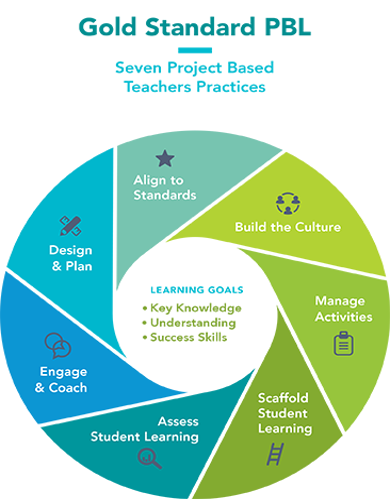
Figure 5: Strategies to Course Design [Source: Buck Institute for Education, Creative Commons]