Lesson 2.3 Pedagogical Approaches for Online Teaching
| Impresso por: | Gość |
| Data: | terça-feira, 14 de julho de 2026 às 23:34 |
Índice
- 1. Introduction
- 2. Active Learning
- 3. Developing Active Learning
- 4. Principles of Active Learning
- 5. Active Learning Techniques
- 6. Constructive Alignment
- 7. Strategies to Course Design
- 8. Metacognition
- 9. Understanding Students’ Learning Challenges
- 10. No ‘Best Practice’ For Online Course Design
- 11. Conclusion
- 12. References
1. Introduction
This lesson introduces effective strategies for fostering digital education focusing on active learning, interaction, and collaboration in online education. Active learning plays a vital role in virtual classrooms, as it keeps students engaged and connected. Through activities like discussions, group tasks, and interactive assignments, students not only enhance their retention but also cultivate critical thinking skills. Collaborative activities promote teamwork and communication, essential for success in digital environments. Additionally, active learning in online education is adaptable to various formats, accommodating students' individual learning preferences and pace. Overall, by encouraging engagement, retention, critical thinking, collaboration, and flexibility, active learning enhances student outcomes in the online environment.
Video 1: Pedagogical Approaches for Online teaching [Duration 1:52 minutes, created by the course authors]
2. Active Learning
Active learning constitutes an instructional approach that engages learners actively within the learning process. This pedagogical approach involves learners in meaningful activities, encouraging them to both undertake actions and think the things they are doing. By engaging in active learning, students interact meaningfully with course content, their peers, and educators, utilising various educational tools and technologies, thereby fostering cognitive engagement. Unlike passive modalities like traditional lectures, active learning necessitates a higher degree of learner responsibility, but instructor guidance is still crucial.
Central to active learning is the construction of individual understanding, wherein learners establish connections between pre-existing knowledge and novel experiences, subsequently reflecting on the evolution of their comprehension. Embedded within these learning activities are assessment tasks that afford students the opportunity to demonstrate mastery of the prescribed learning objectives.
Active learning doesn’t simply make learning more interesting for students. It also promotes:
- higher-level thinking,
- independent study skills,
- communication skills and
- problem-solving abilities.
These skills are transferable to work, further study and personal and professional life, and will set students up for whatever they choose to do next (OU, n.d.).
3. Developing Active Learning
Active learning is particularly important in online education, where students aren’t in the same location as their peers. Instructors should start thinking about active learning from the moment they start planning their online learning materials and incorporate strategies to encourage active learning, application, interaction, participation, and collaboration in the online environment. In an active learning environment, learners are immersed in experiences within which they engage in meaning-making inquiry, action, imagination, invention, interaction, hypothesizing and personal reflection (Cranton, 2012).
Active learning is about what the student does rather than what the teacher does (OU, n.d.). Most of the activities should be designed to prompt students not simply to read, see or listen to information but to search for it, process it, discuss it, present it, reflect on it, and apply it in real or simulated scenarios to which they can relate. Incorporating active learning in online learning environments is crucial because it includes collaboration, exchanging ideas, and fostering an inclusive environment.
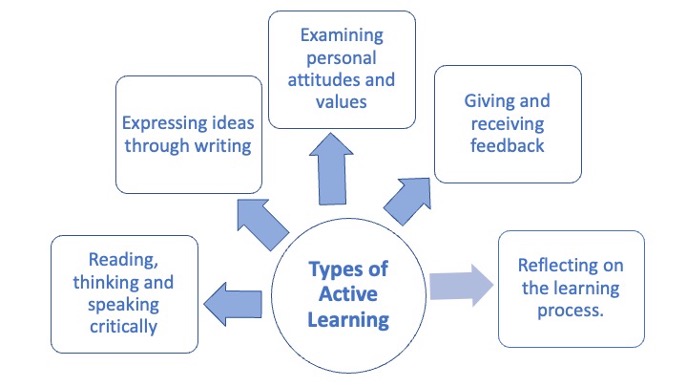
Figure 1: Types of Active Learning
There are a variety of active learning strategies described in the literature. Many university websites provide lists, guides, and resources for active learning strategies:
- Iowa State University Center for Excellence in Learning and Teaching presents 226 Active Learning Strategies;
- Purdue University offers Active Learning Strategies and Resources;
- University of Leicester active learning strategies.
4. Principles of Active Learning

Barnes (1989) suggested the following principles of active learning:
- Purposive: the relevance of the task to the students' concerns.
- Reflective: students' reflection on the meaning of what is learned.
- Negotiated: negotiation of goals and methods of learning between students and teachers.
- Critical: students appreciate different ways and means of learning the content.
- Complex: students compare learning tasks with complexities existing in real life and making reflective analysis.
- Situation-driven: the need of the situation is considered in order to establish learning tasks.
- Engaged: real life tasks are reflected in the activities conducted for learning.
The instructional design of online courses, taken together with active learning, deals with motivation, challenge, individual learning preferences, and social interaction. When instructors incorporate active learning techniques closely tied to desired learning outcomes, they can transform practical experiences into the online classroom environment. Experiential opportunities create authentic opportunities for sharing and transferring knowledge of information to learners in order to meet the required course learning performance goals and standards. These examples cultivate learner development, build on learners’ previous knowledge, and help learners develop in-depth knowledge and enhance team building, problem-solving, analysis, and critical thinking skills. In this section we shared just a few ways faculty can engage learners by incorporating active and experiential learning activities into online courses.
5. Active Learning Techniques
There are a broad range of active learning techniques (see Figure 5) and active teaching and learning methodologies (see Figure 6) that can be integrated into online teaching and learning.
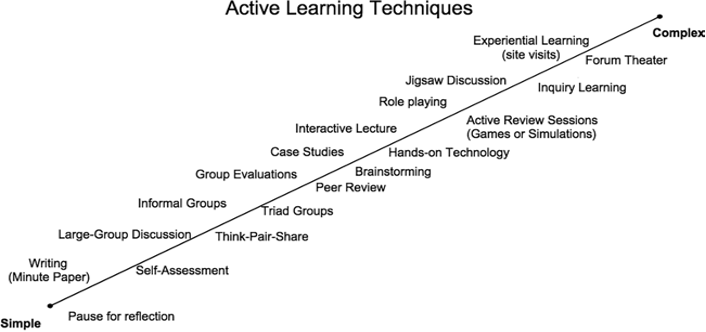
Figure 2: Active learning techniques [Source: Chris O'Neal and Tershia Pinder-Grove, Center for Leaming and Teaching, University of Michigan]
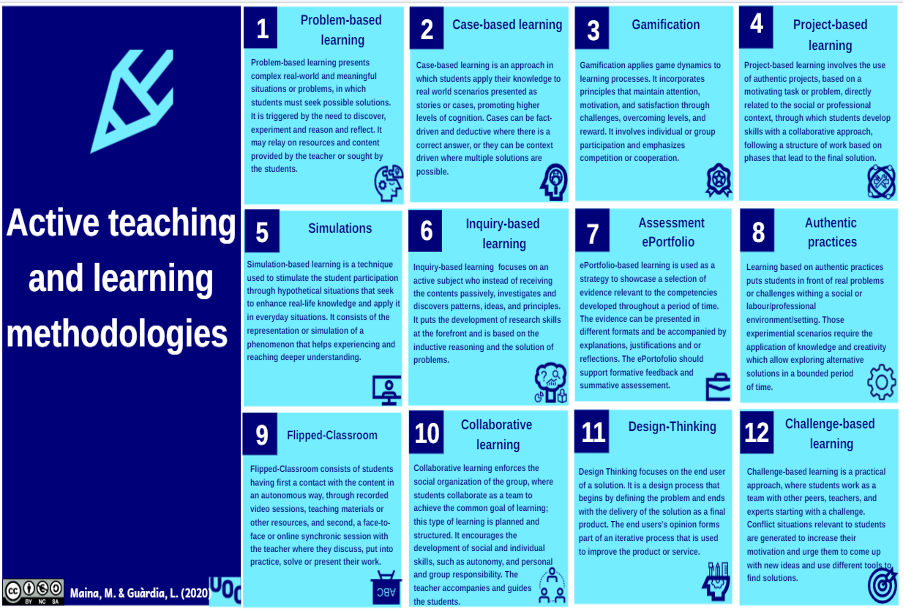
Figure 3: Active teaching and learning methodologies [Source: Maina & Guàrdia, 2020].
6. Constructive Alignment
Course Units should be designed so that the Learning Activities and Assessments are aligned with one another and support and measure students' achievement of the unit’s Intended Learning Outcomes (ILOs).
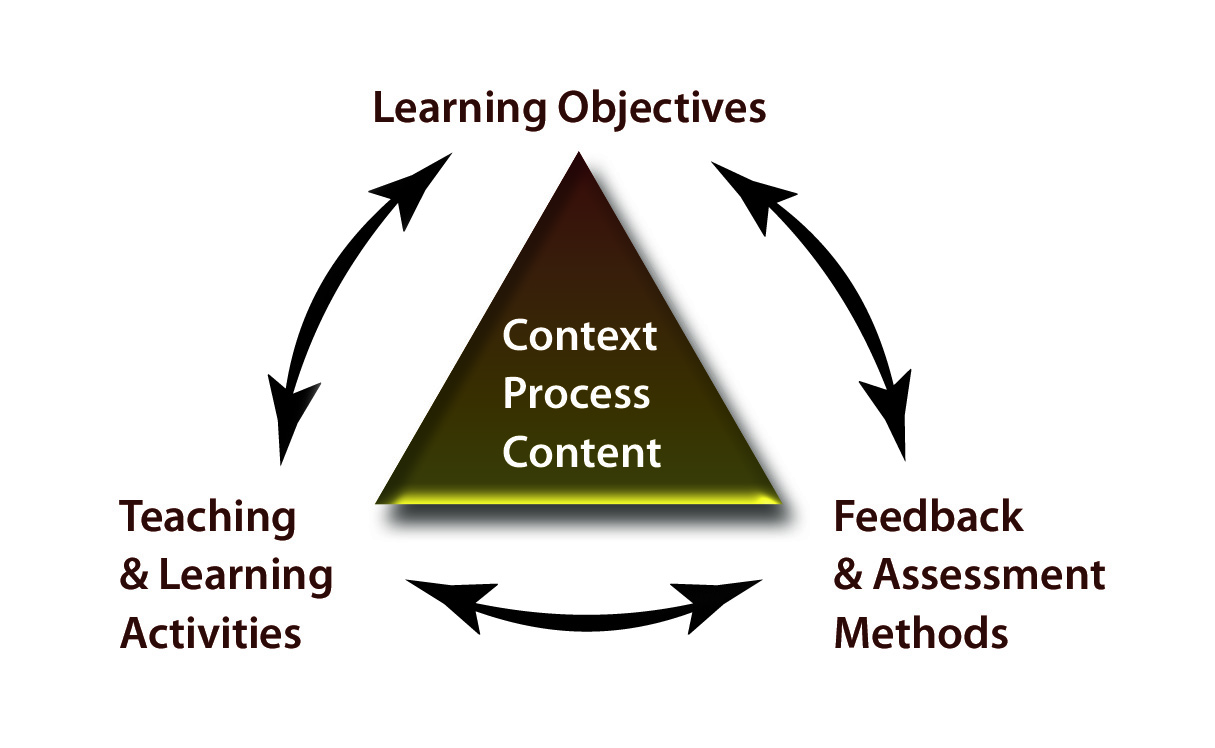
Figure 4: Constructive alignment [Graphic courtesy of Doug Schaefer]
Constructive Alignment (CA) is an approach to teaching in which learning outcomes are the foundation of all teaching decisions. Therefore, all learning experiences in a course (whether technological or not) must be rooted in the course Learning Objectives. So, before adding an activity or learning experience, ask yourself, “Which Learning Outcome does this support?”
Course Units are designed so that the Learning Activities and Assessments are aligned with one another and support and measure students’ achievement of the unit’s Intended Learning Outcomes (ILOs). “Constructive alignment is a design for teaching in which what it is intended students should learn and how they should express their learning is clearly stated before teaching takes place. Teaching is then designed to engage students in learning activities that optimise their chances of achieving those outcomes, and assessment tasks are designed to enable clear judgments as to how well those outcomes have been attained” (Biggs, 2014, pp. 5-6). Alignment occurs when the learning activities that we ask students to engage in help them to develop the knowledge, skills and understandings intended for the unit and measured by our assessment. A constructively aligned unit capitalises on the powerful effect of assessment on students' learning experiences. If assessment drives students' learning, then students are most likely to achieve our intended outcomes if the assessment is aligned with our intentions.
The Framework of Constructive Alignment
The framework of constructive alignment to unit design:
- Identify the intended learning outcomes (ILOs).
- Design assessment tasks to measure attainment of the learning outcomes.
- Plan learning activities to enable students to develop the skills, knowledge and understandings described in the ILOs and measured by assessment.
- Choose the content required to support the learning activities.
7. Strategies to Course Design
Several strategies for effective online course design have been proposed. For example, Active Learning Cheat Sheet. 10 Steps to getting started provides the following 10 steps:
- Create an open and safe environment.
- Set a goal for the activity.
- Choose the right exercise.
- Identify preparation for the exercise.
- Consider links to other class elements.
- Plan how you will introduce the activity.
- Plan the logistics.
- Consider how you will judge success.
- Just do it.
- Iterate and expand.
In the vast expanse of online education, the art of course design emerges as a paramount endeavour, requiring careful planning, strategic foresight, and a keen understanding of pedagogical principles. Among the myriad strategies proposed to navigate this terrain, the Active Learning Cheat Sheet stands as a guiding beacon, offering a roadmap for educators embarking on the journey of online course design.
At its core lies a comprehensive framework encapsulated within 10 succinct steps, each a vital component in the tapestry of effective online learning experiences. The journey begins with the creation of an open and safe environment, a virtual sanctuary where learners feel empowered to explore, inquire, and collaborate without fear of judgment or reprisal. Here, the seeds of trust and camaraderie are sown, laying the foundation for meaningful engagement and shared discovery.
With the stage set, the educator charts a course by setting clear goals for each learning activity, guiding students towards a specific destination and imbuing their efforts with purpose and direction. Like a compass guiding a ship through turbulent waters, these goals serve as beacons of clarity, illuminating the path ahead and orienting learners towards success.
Next, the educator carefully selects the right exercises to achieve these goals, choosing activities that are not only engaging and interactive but also aligned with the desired learning outcomes. Whether it be discussion forums, collaborative projects, or interactive simulations, each exercise is thoughtfully curated to maximise student engagement and deepen understanding.
Preparation is key to success, and so the educator diligently identifies the resources and materials needed to support each exercise, ensuring that students have the tools and knowledge necessary to excel. From readings and videos to interactive tools and supplementary resources, every element is meticulously curated to enrich the learning experience.
But learning does not occur in isolation; it is woven into the fabric of a larger educational tapestry. Thus, the educator considers the links between each activity and other course elements, fostering continuity and coherence across the curriculum.
With the groundwork laid, the educator plans the introduction of each activity, setting the stage for engagement and signalling its importance to students. Clear instructions, learning objectives, and expectations are communicated, empowering students to approach the task at hand with confidence and purpose.
Logistical considerations are paramount in the realm of online education, and so the educator plans meticulously to ensure a seamless experience for students. From technical requirements to scheduling constraints, every detail is attended to, minimizing barriers to participation and maximizing accessibility.
As the activity unfolds, the educator considers how success will be judged, identifying criteria for assessment and evaluation that are aligned with the overarching learning goals. Through formative feedback and reflection, students are guided towards mastery, their progress celebrated and their challenges addressed with empathy and support.
But perhaps the most important step of all is to simply take action – to dive headfirst into the realm of active learning and embrace the journey with enthusiasm and determination. With each iteration, the educator refines their approach, incorporating feedback and insights gleaned from experience to continuously improve and expand upon their practice.
In this way, the Active Learning Cheat Sheet serves as a guiding compass, navigating educators through the intricate landscape of online course design and empowering them to create transformative learning experiences that inspire, engage, and empower students to reach new heights of knowledge and understanding.
Another resource, How to Plan Effective Lessons for Your Online Classroom, suggest 7 major steps:
- Understand Your Students
- Set a Clear Objective for the Lesson
- Incorporate Visuals, Visuals, and More Visuals
- Keep Your Teaching Modules Short
- Keep a Clear and Consistent Structure
- Add Assignments and Homework
- Evaluate, Reflect and Revise.
Buck Institute for Education also propose seven steps:
- Design & Plan
- Align to Standards
- Build the Culture
- Manage Activities
- Scaffold Student Learning
- Assess Student Learning
- Engage & Coach
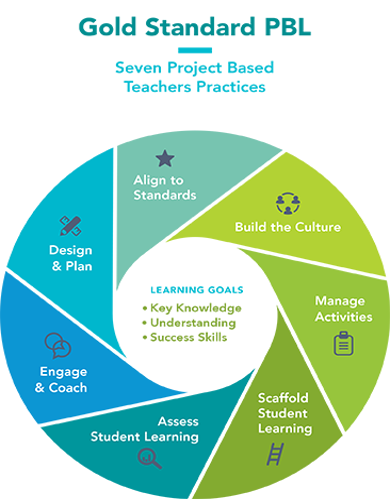
Figure 5: Strategies to Course Design [Source: Buck Institute for Education, Creative Commons]
8. Metacognition
Metacognition, often described as ‘thinking about thinking’, plays a crucial role in student learning in online education. Its significance lies in its ability to enhance students’ awareness of their own learning processes, strategies, and cognitive strengths and weaknesses. In online education, where learners often have greater autonomy and responsibility for their learning, metacognitive skills become even more vital. Metacognition can contribute to student learning in the online environment in the following way:
- Self-regulated learning: Metacognition empowers students to take control of their learning journey by enabling them to set goals, plan strategies, monitor their progress, and adjust their approaches as needed. In an online setting, where students may not have immediate access to instructors, self-regulated learning skills are essential for maintaining motivation and staying on track with coursework.
- Adaptability: Online education often presents diverse learning materials and formats, from text-based readings to multimedia presentations. Metacognitive awareness allows students to assess which strategies work best for them in navigating these varied resources, adapting their study techniques to suit different learning environments and content types.
- Critical thinking: Metacognition fosters critical thinking skills by encouraging students to reflect on the validity and reliability of information encountered in online courses. Through metacognitive processes such as evaluating evidence, identifying biases, and considering alternative perspectives, students can develop a more discerning approach to online content consumption and analysis.
- Problem-solving: When faced with challenges or obstacles in their online studies, metacognitive learners are better equipped to identify the root causes of their difficulties and implement effective solutions. By reflecting on their problem-solving processes and learning from past experiences, students can develop more robust strategies for overcoming academic hurdles.
- Engagement and motivation: Learners with metacognitive skills are more likely to be actively engaged in their online courses, as they possess a deeper understanding of their own learning preferences, interests, and motivations. By aligning course content and activities with their personal goals and aspirations, students can sustain their enthusiasm for learning throughout the online learning experience.
- Transfer of learning: Metacognition facilitates the transfer of learning from one context to another, allowing students to apply knowledge and skills gained in online courses to real-world situations. By reflecting on how they have applied their learning in different contexts and considering the underlying principles at play, students can enhance their ability to transfer knowledge effectively.
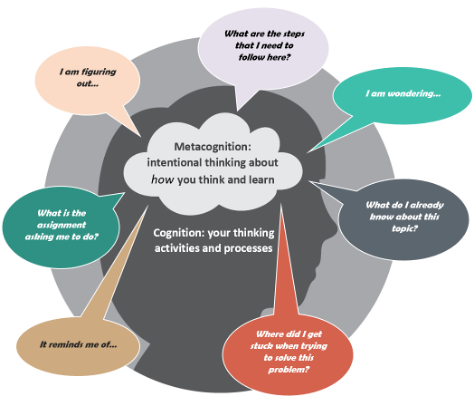
Figure 6: Metacognition [Image Source: https://www.queensu.ca/teachingandlearning/modules/students/24_metacognition.html]
In essence, metacognition serves as a guiding compass for students navigating the complexities of online education, empowering them to become self-directed, adaptive, and critical thinkers who actively engage with course materials, collaborate with peers, and persist in the pursuit of their academic goals.
9. Understanding Students’ Learning Challenges
Throughout the process of learning, students often experience a variety of cognitive, motivational, and affective challenges that can significantly impact their educational journey. These challenges, intricately interwoven and mutually influential, emanate from the complex interplay of cognitive processes, motivational and affective states, and social dynamics within the learning environment. As such, understanding the multifaceted nature of these challenges is essential for educators seeking to support their students effectively.
Cognitive challenges encompass a broad spectrum of obstacles that impede students’ acquisition, processing, and retention of knowledge. These may manifest as difficulties in understanding complex concepts, solving problems, or synthesizing information from various sources. Factors such as cognitive load, information processing speed, and working memory capacity can all influence the extent to which students grapple with these challenges. Moreover, individual differences in cognitive styles and learning preferences further contribute to the diversity of cognitive obstacles students may encounter.
Motivational and affective challenges arise from students’ internal drives, attitudes, and emotional states, all of which play pivotal roles in shaping their engagement and perseverance in learning tasks. A lack of intrinsic motivation, fear of failure, or feelings of anxiety and self-doubt can hinder students’ willingness to invest effort and persist in the face of challenges. External factors, including perceived relevance of the material, instructional methods, and feedback mechanisms, also exert significant influence on students’ motivational and affective experiences.
Furthermore, social dynamics within the learning environment serve as both catalysts and barriers to students’ learning experiences. Peer interactions, group dynamics, and classroom norms all contribute to the social context within which learning occurs. Positive social interactions can foster collaboration, cooperation, and a sense of belonging, enhancing students’ motivation and engagement. Conversely, interpersonal conflicts, social comparisons, or feelings of isolation can undermine students' confidence and impede their learning progress.
Crucially, students bring with them a wealth of prior knowledge, experiences, and learning strategies that shape their perceptions and responses to new learning situations. This existing knowledge base, combined with the unique dynamics of the current course and classroom environment, profoundly influences students' motivation to engage with course material and participate actively in learning activities. Recognising and leveraging these pre-existing assets can be instrumental in fostering a supportive and inclusive learning environment that meets the diverse needs of all students.
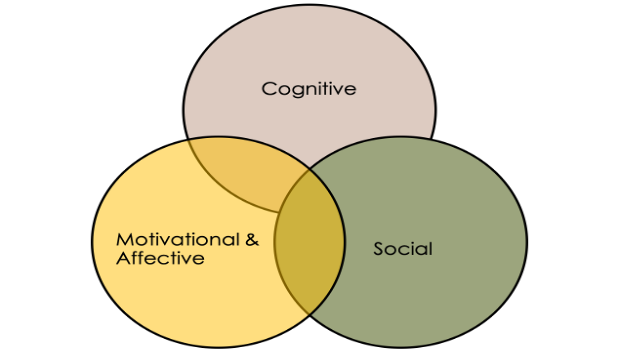
Figure 7: Students’ Learning Challenges
Thus, the challenges students face during the learning process are multifaceted and complex, stemming from the intricate interplay of cognitive, motivational/affective, and social factors. By understanding and addressing these challenges holistically, educators can create learning experiences that empower students to overcome obstacles, cultivate resilience, and achieve their full potential.
Identifying the Problem
As an instructor, one of the first steps to supporting student learning is identifying the instructional challenges that can arise when students are learning the content and developing intellectual skills needed in their disciplines. Keeping the course you identified above in mind, you can complete the Instructional Challenges Inventory. You will rate instructional challenges in your class on a scale ranging from “not a problem” to “a big problem”. Upon completion of the inventory, take a few moments to identify the “big problems” students experience in your course.
Identify Prior Knowledge and Prior Experience
Students come into an online course with a broad range of backgrounds, educational experiences, and prior knowledge and skills. Current research on learning suggests that learning is determined by what the learner already knows about the topic or related topics. If the pre-existing knowledge is correct and consistent with the new information, the effect on learning is positive. However, if prior knowledge is full of misconceptions, or conflicts with new information, the effect on new learning can be negative.
Identifying the prior knowledge and prior experiences of students in an online course is crucial for designing effective instruction, tailoring learning experiences to individual needs, and promoting meaningful engagement. Here are several strategies for identifying and assessing students’ prior knowledge and experiences:
Pre-course surveys: Administer pre-course surveys or questionnaires that inquire about students’ backgrounds, interests, and experiences related to the course topic. Ask open-ended questions to encourage students to reflect on their prior knowledge and experiences in relevant areas. Additionally, include questions about their learning preferences, strengths, and areas of improvement.
Diagnostic assessments: Use diagnostic assessments at the beginning of the course to gauge students’ baseline understanding of key concepts or skills. These assessments can take various forms, such as quizzes, concept maps, or problem-solving tasks. Analyse students’ responses to identify common misconceptions, areas of strength, and gaps in understanding.
Review of prerequisite courses: If your online course has prerequisite courses or recommended readings, review the curriculum and learning objectives of these courses to ascertain the foundational knowledge and skills that students are expected to possess. This can help you assess the readiness of students to engage with more advanced material in your course.
Analysis of assignments and projects: Review any assignments, projects, or portfolios that students may have completed in prior courses or professional experiences. Look for evidence of relevant skills, knowledge, and accomplishments that can inform your understanding of students' prior learning experiences and achievements.
Self-assessment activities: Incorporate self-assessment activities into your course design, where students can reflect on their own strengths, weaknesses, and prior experiences related to the course content. Encourage students to set personal learning goals based on their self-assessment and provide opportunities for them to revisit and revise these goals throughout the course.
Online discussion forums: Use online discussion forums or collaborative platforms to facilitate peer-to-peer interactions where students can share their perspectives, insights, and experiences related to course topics. Encourage students to engage in reflective discussions and dialogue about how their prior knowledge and experiences inform their understanding of new concepts.
Individual consultations: Offer opportunities for individual consultations or office hours where students can meet with you virtually to discuss their background, goals, and any questions or concerns they may have about the course. Use these interactions to build rapport with students and gain deeper insights into their unique learning profiles.
By employing a combination of these strategies, educators can gather valuable information about students’ prior knowledge and experiences, allowing them to design instructional activities that build upon existing foundations, address misconceptions, and scaffold learning effectively in the online course environment.
10. No ‘Best Practice’ For Online Course Design
However, there is no ‘best practice’ for online course design, because this is contextual to each teaching and learning situation and discipline area. We should consider the content, purposes, and instructional strategies as well as how the instruction is represented and controlled through available technology tools.
The starting point should be
- understanding student needs,
- developing engaging activities,
- building a sense of community,
- employing discussion and reflections during presentations,
- providing tips, hints and tools for achieving these goals.
11. Conclusion
Pedagogical approaches for online teaching have evolved significantly, driven by the need to address the unique challenges and opportunities of digital education. Central to effective online pedagogy is the constructivist approach, which emphasizes active, student-centered learning. This approach leverages interactive tools such as discussion forums, collaborative projects, and peer assessments to foster a dynamic learning environment. Additionally, the flipped classroom model has gained traction, where students engage with lecture materials asynchronously and use synchronous sessions for interactive, application-based activities.
Another critical aspect is the use of multimodal content delivery, incorporating videos, readings, quizzes, and simulations to cater to diverse learning styles and keep students engaged. Formative assessment is emphasized to provide ongoing feedback and support, utilizing tools like automated quizzes, e-portfolios, and reflective journals.
Furthermore, social presence and community-building are crucial in online settings to combat isolation and enhance motivation. Strategies include regular instructor-student and student-student interactions, virtual office hours, and collaborative tools like group projects and peer review systems.
Effective online teaching also requires adaptability and continuous improvement. Instructors must be proficient with digital tools and platforms, and stay updated with emerging technologies and pedagogical strategies through professional development. This ongoing refinement ensures that online education remains engaging, effective, and equitable for all learners.
12. References
Active Learning Cheat Sheet. 10 Steps to getting started
Barnes, D.(1989). Active Learning. Leeds University TVEI Support Project.
Biggs, J. (2003). Aligning teaching for constructing learning, HEA.
Biggs, J. (2014). Constructive alignment in university teaching. HERDSA Review of Higher Education, 1, 5-22.
Bonwell, C. C., & Eison, J. A. (1991). Active learning: Creating excitement in the classroom. ASHE-ERIC Higher Education Report No. 1. Washington, DC: The George Washington University.
Brame, C. (2016). Active learning. Vanderbilt University Center for Teaching. Retrieved [todaysdate] from https://cft.vanderbilt.edu/active-learning/.
Brown, A. (2014). Implementing active learning in an online teacher education course, American Journal of Distance Education, 28(3), 170–182
Budhai, S. S.; Brown Skipwith, K. A. (2022). Best practices in engaging online learners through active and experiential learning strategies. Routledge.
Cranton, P. (2012). Planning instruction for adult learners (3rd ed.). Toronto: Wall & Emerson.
Ertmer, P. A., & Ottenbreit-Leftwich, A. (2013). Removing obstacles to the pedagogical changes required by Jonassen's vision of authentic technology-enabled learning. Computers & Education, 64, 175–182.
Garrison, D. R., Anderson, T., & Archer, W. (2000). Critical inquiry in a text-based environment: Computer conferencing in higher education. The Internet and Higher Education, 2(2–3), 87−105.
Grabinger, S., Dunlap, J. (1995). Rich environments for active learning: a definition. Research in Learning Technology, 3 (2): 5–34.
Hamilton, E. R., Rosenberg, J. M., & Akcaoglu, M. (2016). The substitution augmentation modification redefinition (SAMR) model: A critical review and suggestions for its use. TechTrends, 60(5), 433–441.
Harasim, L. (2017). Learning theory and online technologies (2nd ed.). New York: Routledge.
How to Plan Effective Lessons for Your Online Classroom
Jonassen, D. H. (1996). Computers in the classroom: Mindtools for critical thinking. Prentice-Hall, Inc.
Koehler, M., & Mishra, P. (2009). What is technological pedagogical content knowledge (TPACK)?. Contemporary Issues in Technology and Teacher Education, 9(1), 60–70.
Moersch, C. (1995). Levels of technology implementation (LoTi): A framework for measuring classroom technology use. Learning and Leading with Technology, 23, 40–42.
Open University (n.d). Active learning: making learning engaging.
Panitz, T. (December 1999). Collaborative versus cooperative learning: a comparison of the two concepts which will help us understand the underlying nature of interactive learning.
Sivan, A., Leung, R.W., Woon, C. and Kember, D. (2020). An implementation of active learning and its effect on the quality of student learning. Innovations in Education and Training International, 37 (4), 381–389.
West, R. E. & Allman, B. (2021). Designing Technology- Enhanced Learning Experiences. In J. K. McDonald & R. E. West (Eds.), Design for Learning: Principles, Processes, and Praxis. EdTech Books. https://edtechbooks.org/id/designing_technology