
Lesson 1.2 Historical Background and Evolution of Digital Education
8. Massive Open Online Courses
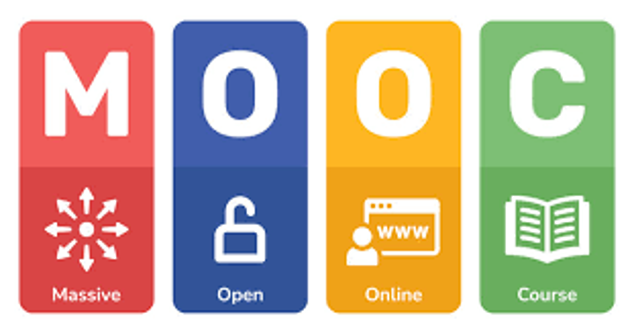
A Massive Open Online Course (MOOC) is a model for delivering learning content online to any person who wants to take a course, with no limit on attendance. MOOCs surged in popularity in 2012, dubbed "the year of the MOOC" by The New York Times. They combine elements of open education, video content, and Web 2.0 hype. Initially championed by educators like George Siemens and Stephen Downes, MOOCs gained widespread attention when Stanford professor Sebastian Thrun's course on artificial intelligence attracted over 100,000 learners.
Despite early excitement, MOOCs have not revolutionized education as predicted. Completion rates are low, demographics skewed toward already educated individuals, and sustainability remains a challenge due to high costs. This led to a shift in focus, with some institutions integrating MOOCs into traditional learning environments.
Practically, millions have found MOOCs beneficial, with applications ranging from personal enrichment to formal education. They've also bolstered the profile of online education and open practices, even though they may not fully embody openness themselves.
In conclusion, while MOOCs have brought digital and open education closer, they fall short of some ideals, often veering toward conventional education models driven by commercial interests (Weller, 2023; Zawacki-Richter & Jung, 2023).