Lesson 1.1 Introduction to Digital Education
| Svetainė: | KTU atvirieji mokymai |
| Kursas: | Digital Education |
| Knyga: | Lesson 1.1 Introduction to Digital Education |
| Spausdino: | Svečio paskyra |
| Data: | trečiadienis, 2026 liepos 15, 07:55 |
1. Introduction
One of the primary advantages of digital education is its ability to transcend traditional classroom boundaries, enabling anytime, anywhere learning. This flexibility allows students to access educational resources and participate in learning activities at their convenience, thus accommodating diverse learning styles and schedules. Digital education also facilitates collaborative learning environments through online forums, social media, and other digital communication tools, fostering a sense of community and peer interaction that enhances the overall learning experience.
Moreover, digital education leverages advanced technologies such as artificial intelligence, virtual reality, and augmented reality to provide immersive and adaptive learning experiences. These technologies can tailor educational content to individual learner needs, offering personalized feedback and support that can significantly improve learning outcomes. Additionally, digital education tools often include data analytics capabilities, enabling educators to monitor student progress in real-time and make data-driven decisions to enhance instructional strategies.
Furthermore, digital education promotes the development of digital literacy skills, which are essential for success in the modern workforce. By engaging with digital tools and platforms, students learn to navigate and utilize technology effectively, preparing them for future careers that increasingly rely on digital competencies.
Thus, digital education represents a transformative approach to teaching and learning, harnessing the power of technology to create flexible, interactive, and personalized educational experiences. It not only extends the reach of traditional education but also equips students with the digital skills necessary for the 21st-century landscape.
2. Key points about digital education

The key points about digital education are:
- Innovative use of digital tools and technologies. It involves the innovative use of digital tools and technologies such as online platforms, educational software, multimedia resources, and social media to deliver educational content and experiences. These tools enable educators to create dynamic and interactive learning environments that go beyond traditional instructional methods.
- Comprehensive education for the digital age. The primary goal of digital education is to equip students with a well-rounded education that prepares them for success in the digital age. This includes developing digital literacy and technical skills essential for navigating in a technology-driven world.
- Personalized and flexible learning. Digital education supports personalized and flexible learning pathways, allowing students to access educational content and resources at their own pace and according to their individual learning preferences and learning style. This adaptability ensures that learners can engage with material in ways that best suit their needs.
- Diverse digital tools and approaches. Key tools and approaches in digital education include learning management systems (LMS), online course platforms, educational apps, virtual reality (VR), and big data analytics. These technologies optimize learning by providing immersive experiences, tracking progress, and offering tailored feedback.
- Effective implementation factors. Successful implementation of digital education requires addressing critical factors such as ensuring access to digital content, building the capacity of teachers and students to effectively use digital tools, and maintaining reliable internet connectivity. Overcoming these challenges is essential for maximizing the benefits of digital education.
- Transformative potential of digital education. Digital education has the potential to significantly transform the educational landscape by enhancing the quality and relevance of learning. It promotes inclusion by making education more accessible to diverse populations and improves education administration and governance through efficient data management and communication tools.
In summary, digital education leverages digital technologies to deliver a more engaging, personalised, and effective learning experience that prepares students for success in the modern, technology-driven world by fostering essential digital skills and creating adaptable learning environments.
3. Defining Digital Education

In scholarly discussions, a diverse range of alternative terms has been used to designate various modes of educational delivery. These encompass expressions such as remote learning, distance learning, distance education, open learning, e-learning, flexible learning, hybrid learning, blended learning, web-based learning, online learning, mobile learning, virtual learning, technology-enhanced learning, and distributed learning as found in the extant literature (Zawacki-Richter & Jung, 2023).
- learning can be organized by a department or instructor using a learning management system (LMS),
- studying remotely, giving the freedom to learn at any convenient time,
- the type of learning where information and communication technology (ICT) is its main mean for content delivery, interaction and facilitation and it can be either asynchronous or synchronous.
The term Technology-Enhanced Learning (TEL) is used to describe the application of information and communication technologies to teaching and learning. Explicit statements about what the term is understood to mean are rare and it is not evident that a shared understanding has been developed in higher education of what constitutes an enhancement of the student learning experience (Kirkwood & Price, 2014).
Online teaching and learning are forms of open and distance education (Zawacki-Richter & Jung, 2023). Singh and Thurman (2019) provided multiple definitions of online learning based on the systematic literature review for over the last 30 years. The definitions included various elements such as technology, time, interactivity, and educational context. Thus, online learning is defined as learning experienced through the internet/online computers in a synchronous classroom where students interact with instructors and other students and are not dependent on their physical location for participating in this online learning experience (Singh & Thurman, 2019, p. 302).
E-learning is an approach to teaching and learning, representing all or part of the educational model applied, that is based on the use of electronic media and devices as tools for improving access to training, communication and interaction and that facilitates the adoption of new ways of understanding and developing learning (Sangrà et al., 2012). Even if it is not online, an interactive learning program on a tablet that is not linked to the Internet would be deemed an e-learning application.
Terms such as blended learning (Osguthorpe & Graham, 2003), flexible learning (Collis & Moonen, 2001), or distributed learning (Lea & Nicoll, 2002) became prevalent at the beginning of the new Millennium. The experience and practice with online learning and teaching during the Covid-19 pandemic then gave rise to other terms such as remote and hybrid learning (Zawacki-Richter & Jung, 2023).
Blended learning nowadays refers to the learning process that combines face-to-face and online interactions in such a way that both complement each other (Hrastinski, 2019). Cronje (2020) proposed that blended learning is “the appropriate use of a mix of theories, methods and technologies to optimi[s]e learning in a given context” (p. 120).
Hybrid teaching is defined as an educational approach or delivery mode that combines traditional face-to-face instruction with online learning to create a flexible and dynamic learning environment. In hybrid teaching both on-site students and remote students attend simultaneously during synchronous (real-time) teaching and learning sessions. The aim of hybrid teaching is to leverage the advantages of both traditional and digital learning methods (Vaughan et al., 2013; Beatty, 2019; Padilla Rodriguez & Armellini, 2021).
4. Components of Digital Education
Digital education typically comprises several key components:
- Course Content: This includes the educational materials, such as interactive e- lessons, simulations, readings, videos, and assignments, that are delivered electronically through a learning management system (LMS) or other online platforms.
- Interaction: Interaction between students and instructors, as well as among students themselves, can take various forms, including collaborative learning through online discussions, forums, live chats, and video conferences.
- Assessment: Assessment methods may include quizzes, exams, essays, projects, and peer evaluations, all of which can be administered and submitted online.
- Feedback: Instructors provide feedback on student work, guiding their progress and addressing areas for improvement. This feedback can be given through written comments, recorded audio/video, or live discussions by e-tutors, e-coaching, and e-mentoring.
- Technology: Online learning relies on various technologies such as computers, the internet, learning management systems, multimedia tools, and communication platforms to facilitate the delivery of content and interaction between participants.
- Support Services: Institutions often offer online support services such as technical assistance, academic advising, counseling, and library resources to help students succeed in their online learning endeavors. Services which provide human and social dimensions can be offered to learners to support them through the online learning experience (e-tutoring, e-coaching, e-mentoring).
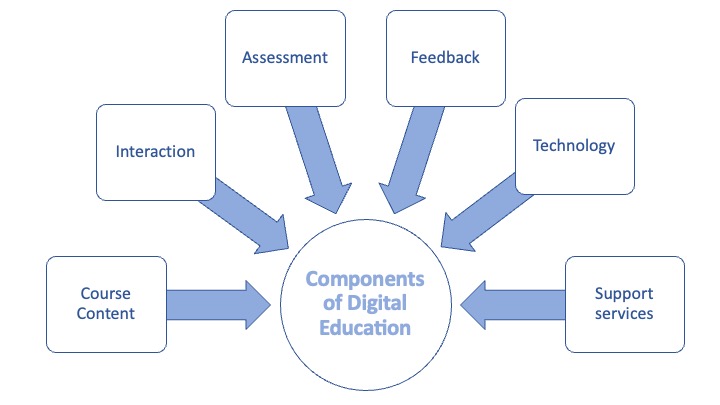
Figure 1: Components of Digital Education
Collaborative activities within online learning environments encompass a broad spectrum of interactions, spanning from engaging in discussions and exchanging knowledge to collaborating on joint projects. These activities foster a sense of community and collective learning among participants. Leveraging social software tools like chat platforms, discussion forums, and blogs, learners can seamlessly collaborate and communicate with one another irrespective of geographical barriers. These platforms facilitate dynamic interactions, enabling learners to share ideas, seek feedback, and collectively construct knowledge in a collaborative online setting. A virtual classroom is the instructional method most similar to traditional classroom training, as it is led completely by an instructor.
These components work together to create a comprehensive online learning experience that provides flexibility, interactivity, and accessibility to learners. Navigating the nuances of online learning approaches and components, students uncover the diverse methodologies employed to cultivate engaging and effective learning experiences. From the development of interactive e-lessons to the facilitation of collaborative learning environments, learners discern the intricate tapestry of elements woven into the fabric of digital education.
5. Synchronous and Asynchronous Digital Education

Digital Education activities can be synchronous or asynchronous:
- Synchronous activities take place in real time. Synchronous communication between two people requires them to both be present at a given time. Examples of synchronous activities include chat conversations and audio/video conferencing.
- Asynchronous activities are time-independent. A self-paced course is an example of asynchronous e-learning because online learning takes place at any time. E-mail or discussion forums are examples of asynchronous communication tools.
Synchronous activities facilitate immediate interaction and feedback, fostering a dynamic and interactive educational experience. Examples of synchronous activities include:
- Chat conversations. These allow for instant messaging between participants, enabling quick exchanges of information and clarification of concepts.
- Audio/Video conferencing. Platforms like Zoom, Microsoft Teams, and Google Meet enable real-time discussions, lectures, and collaborative sessions, enhancing the sense of community and immediacy among participants.
- Live webinars. These are scheduled online seminars where participants can interact with the presenter and other attendees in real-time, often featuring Q&A sessions to address participants' questions.
Asynchronous activities, on the other hand, do not require participants to be engaged simultaneously. This flexibility allows learners to access and engage with educational materials at their own pace and on their own schedule, accommodating diverse time zones and personal commitments. Asynchronous activities support self-directed learning and reflection, enabling participants to revisit materials as needed. Examples of asynchronous activities include:
- Self-Paced Courses: These courses provide learners with pre-recorded lectures, readings, and assignments that can be completed at any time. This model supports individualized learning trajectories and flexibility.
- E-mail Communication: E-mail allows for the exchange of information and feedback without the need for real-time interaction, enabling thoughtful and considered responses.
- Discussion Forums: Online forums provide a platform for ongoing discussions where participants can post questions, share insights, and engage in collaborative problem-solving at their convenience. These forums often serve as a valuable repository of information and peer support.
In conclusion, both synchronous and asynchronous digital education activities play crucial roles in creating a comprehensive and flexible learning environment. By leveraging the strengths of each modality, educators can design instructional experiences that meet the diverse needs and preferences of learners.
6. Preparation for Digital Education

The seamless transition to digital education hinges upon a myriad of factors, each crucial in its own right. First and foremost is the provision of essential tools for all participants, both lecturers and students alike. The acquisition and distribution of ICT equipment stand as the foundation upon which effective remote education is built. Ensuring equitable access to these tools among all involved parties is paramount, for it forms the bedrock of inclusivity within the virtual classroom.
Yet, beyond mere hardware lies the social fabric of the educational community. A conducive environment must be cultivated - one that fosters active engagement and meaningful participation. Whether through virtual forums, collaborative platforms, or tailored support systems, the social milieu must empower every individual to fully immerse themselves in the learning journey.
Central to the efficacy of digital education is the caliber of ICT resources at the institution's disposal. The adequacy and appropriateness of these technological assets determine the degree of seamlessness in organizing and conducting remote studies. From robust connectivity solutions to versatile software suites, the technological infrastructure must be not only sufficient but also conducive to the dynamic demands of virtual pedagogy.
Furthermore, the software utilized within the educational ecosystem plays a pivotal role in shaping the remote learning landscape. Its suitability and functionality are instrumental in establishing an environment conducive to remote collaboration and productivity. The seamless integration of such software into the educational framework is indispensable for facilitating effective teaching and learning experiences.
Yet, technology alone cannot guarantee success; the competencies of all participants are equally vital. Both lecturers and students must possess the requisite skills and adaptability to navigate the nuances of remote education effectively. Training initiatives and ongoing support mechanisms are essential for bridging any competency gaps and empowering individuals to thrive in the digital realm.
Lastly, the financial underpinning of the institution must not be overlooked. Adequate resources are essential for procuring ICT equipment, fostering a supportive social milieu, and facilitating professional development initiatives for educators. The institution's commitment to investing in these facets underscores its dedication to delivering quality education, irrespective of the mode of delivery.
In summation, the efficacy of digital education hinges upon a multifaceted approach - one that addresses not only technological infrastructure but also social dynamics, software capabilities, individual competencies, and financial support. It is through the harmonious orchestration of these elements that the true potential of digital education can be realized, ushering in a new era of inclusive and accessible learning.
7. Conclusion
In conclusion, the exploration of digital education reveals a multifaceted landscape characterised by a myriad of terms, methodologies, and components. Digital education, encompassing online learning, e-learning, and technology-enhanced learning, represents a paradigm shift in educational delivery, leveraging digital tools and technologies to create engaging and personalised learning experiences. Key points underscore the innovative use of digital tools, the cultivation of digital literacy, and the potential to transform education by enhancing quality, relevance, and inclusivity.
This Lesson delves into various modalities of digital education, from synchronous and asynchronous activities to hybrid and blended learning approaches. It emphasises the importance of comprehensive course content, interactive engagement, effective assessment, and robust support services in crafting meaningful online learning experiences. Moreover, it highlights the essential role of technology infrastructure, software integration, and individual competencies in ensuring the success of digital education initiatives.
Preparation for digital education requires a holistic approach, addressing not only technological needs but also social dynamics, pedagogical strategies, and financial support. Equitable access to resources, a supportive learning environment, and ongoing professional development are essential elements in facilitating effective digital education practices.
In essence, the efficacy of digital education hinges upon the harmonious orchestration of technological, social, pedagogical, and financial factors. By embracing a multifaceted approach that integrates these elements, institutions can unlock the true potential of digital education, ushering in a new era of inclusive and accessible learning for all.
8. References
Beatty, B. J. (2019). Hybrid-flexible Course Design. EdTech Books.Collis, B., & Moonen, J. (2001). Flexible Learning in a Digital World. London: Kogan Page.
Cronje, J. (2020). Towards a new definition of blended learning. Electronic Journal of e- Learning, 18(2), pp. 114-121.
Hrastinski, S. (2019). What do we mean by blended learning? TechTrends: Linking Research and Practice to Improve Learning, 63(5), 564-569. https://doi.org/10.1007/sll528- 019-00375-5
Jung, I. (Ed.). (2019). Open and Distance Education Theory Revisited. Singapore: Springer.
Keegan, D. J. (1980). On defining distance education. Distance Education, 1(1), 13–36.https://doi.org/10.1080/0158791800010102.
Kirkwood, A., & Price, L. (2014). Technology-enhanced learning and teaching in higher education: what is ‘enhanced’and how do we know? A critical literature review. Learning, Media and Technology, 39(1), 6-36.
Lea, M. R., & Nicoll, K. (2002). Distributed Learning—Social and Cultural Approaches to Practice. London: Routledge/Falmer.
Osguthorpe, R. T., & Graham, C. R. (2003). Blended learning environments: Definitions and directions. Quarterly Review of Distance Education, 4(3), 227.
Padilla Rodriguez, B. C., & Armellini, A. (Eds.). (2021). Cases on Active Blended Learning in Higher Education. IGI Global.
Sangrà, A., Vlachopoulos, D. & Cabrera, N. (2012). Building an Inclusive Definition of E-Learning: An Approach to the Conceptual Framework. International Review of Research in Open and Distributed Learning, 13(2), 145–159. https://doi.org/10.19173/irrodl.v13i2.1161
Singh,V., & Thurman, A. (2019). How many ways can we define online learning? A systematic literature review of definitions of online learning (1988-2018). American Journal of Distance Education, 33:4, 289-306, DOI: 10.1080/08923647.2019.1663082
Vaughan, N. D., Cleveland-Innes, M., & Garrison, D. R. (2013). Teaching in Blended Learning Environments: Creating and Sustaining Communities of Inquiry. Athabasca University Press.
Veletsianos, G., VanLeeuwen, C., Belikov, O. & Johnson, N. (2021). An analysis of digital education in Canada in 2017-2019. International Review of Research in Open and Distributed Learning, 22(2), 102–117. https://doi.org/10.19173/irrodl.v22i2.5108
Weller, M. (2023). The Rise and Development of Digital Education. In Handbook of Open, Distance and Digital Education (pp. 1-17). Singapore: Springer Nature Singapore.
Zawacki-Richter, O., & Jung, I. (Eds.). (2023). Handbook of Open, Distance and Digital Education. Springer.